ABSTRACT
The digitization of healthcare — including telemedicine, electronic health records, patient portals, AI decision support, and health applications — promises more accessible, efficient, and personalized care. However, these technologies also risk deepening existing inequalities when access, digital skills, affordability, and usability are uneven.
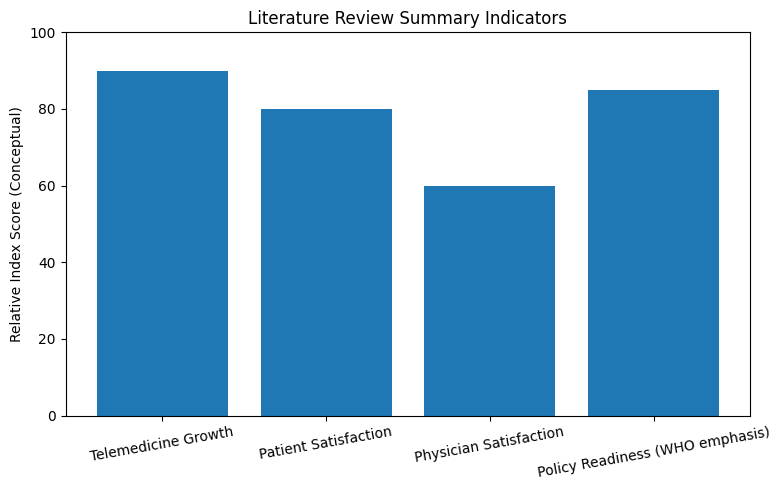
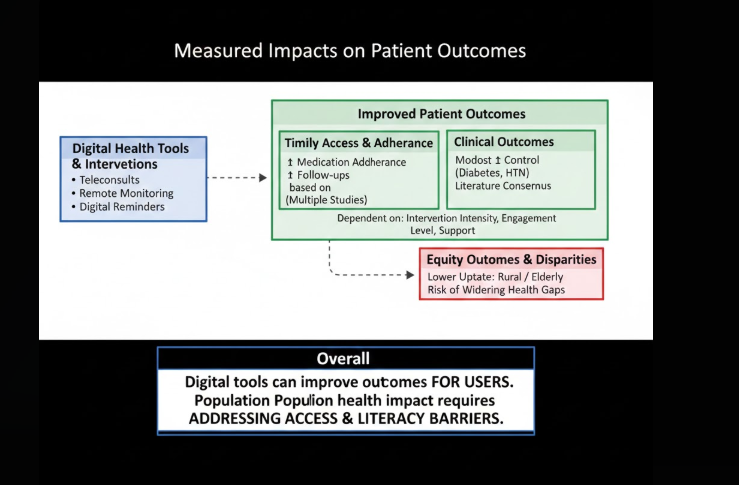
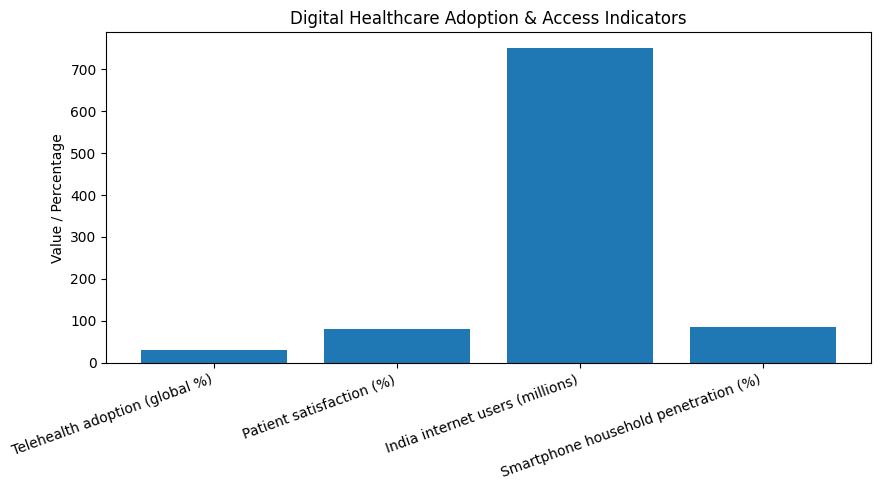
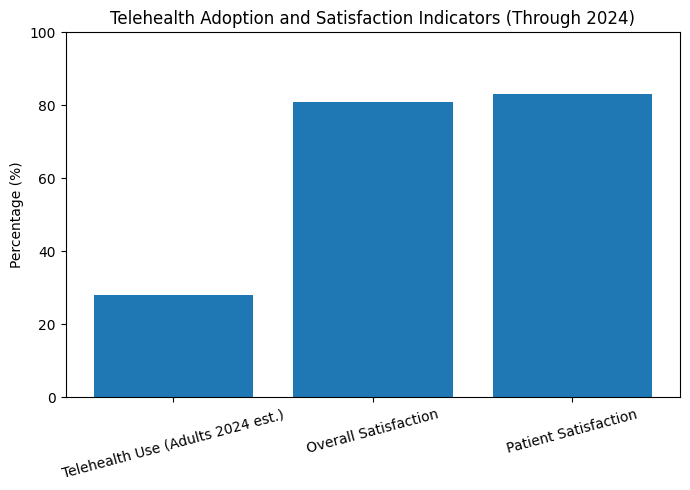
This paper synthesizes global and India-specific evidence to quantify digital health adoption, identify drivers of unequal uptake, and assess impacts on patient outcomes. Evidence suggests telehealth continues to be used by a substantial minority of adults (20–39% in many countries post-pandemic), while patient satisfaction remains high (~80% overall).
In parallel, internet and smartphone penetration in India has grown rapidly (700M+ users; smartphone household penetration ≈85.5%), yet meaningful gaps persist across rural/urban, older/younger, and low/high socioeconomic groups.
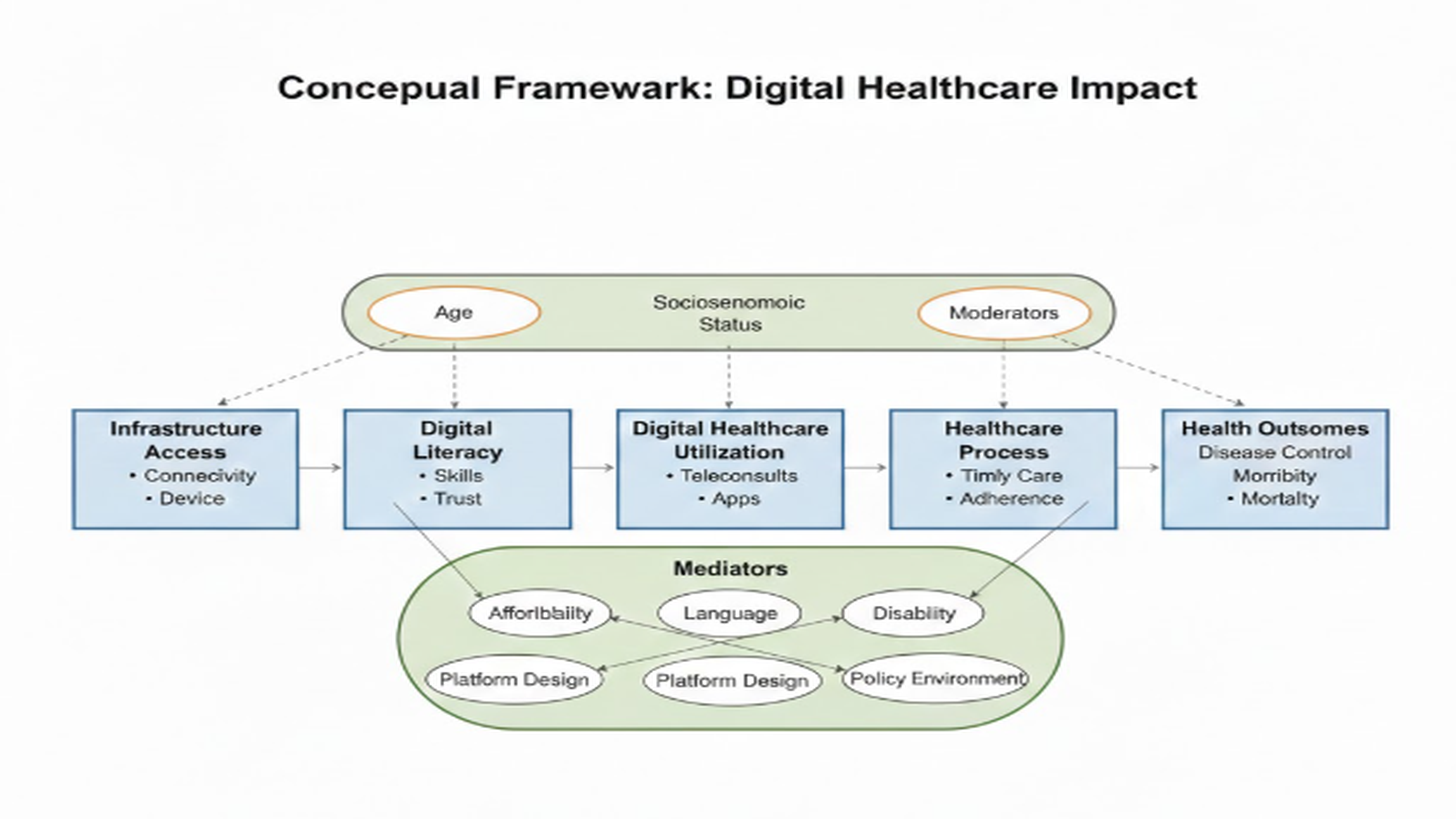
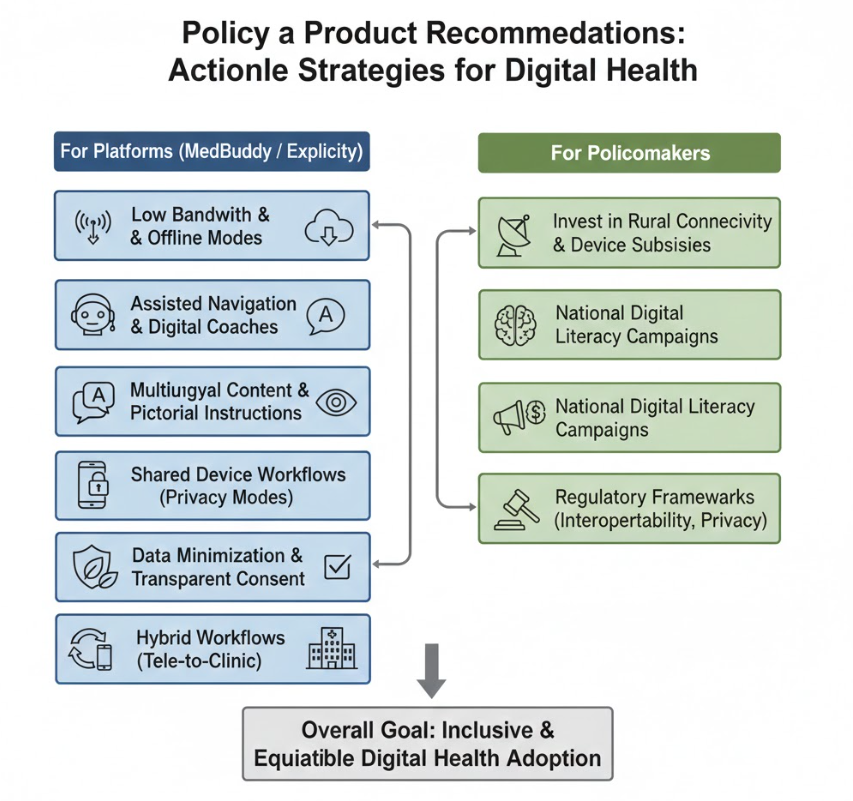
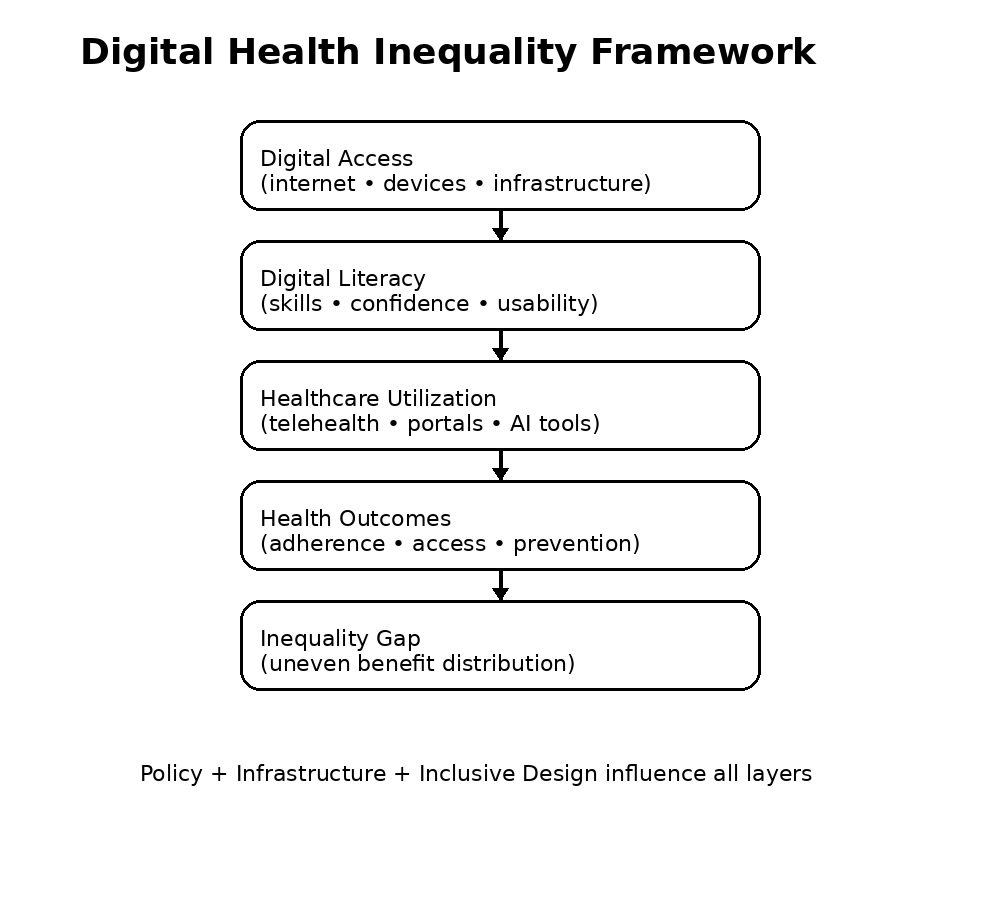
We present a conceptual model linking digital access and literacy to downstream health outcomes, analyze benefits and risks of accelerated digitalization, and propose an equity-centered roadmap. Recommendations include low-bandwidth design, assisted navigation, community literacy programs, targeted subsidies, and integrated offline workflows to ensure inclusion.
Primary sources include DataReportal, telehealth systematic reviews, national utilization analyses, and the WHO digital health strategy.
.png)
.png)